cards
Powered by PayPal

Author: English Lab for Life

  • 🎧Who invented emojis?

    B1 · Listening

    🎧 Sound Check

    Get ready to listen.

    Before you listen, think about this:

    How often do you use emojis?

    Can emojis express ideas as well as feelings?

    What did people use before emojis?

    Match the words with their meanings.

    1. symbola. to create something for the first time
    2. emotionb. connected with computers or electronic technology
    3. communicatec. a feeling such as happiness, sadness or anger
    4. inventd. to understand something incorrectly
    5. expressione. a sign or picture that represents an idea
    6. punctuationf. marks such as commas, full stops and brackets
    7. digitalg. to share information, thoughts or feelings
    8. misunderstandh. the way a feeling is shown on a face or in words
    📢 Check the results
    • 1 – e
    • 2 – c
    • 3 – g
    • 4 – a
    • 5 – h
    • 6 – f
    • 7 – b
    • 8 – d

    ▶️ First Hearing

    Listen once. Don’t chase every word.

    Don’t worry about names, numbers or details yet. Concentrate on the main message.

    Which statement best summarizes the video?

    A. Emojis are used only by young people.
    B. Emojis developed from earlier forms of written communication and help people express meaning in digital messages.
    C. Emojis are replacing all spoken languages.
    D. Emojis were invented to make mobile phones more expensive.

    📢 Check your hearing

    ✅ B is the best answer.

    🎚️ Fine-Tuning

    Listen again. This time, tune in to the details.

    1. What did people use before modern emojis?

    A. Only photographs
    B. Punctuation marks and emoticons
    C. Voice recordings
    D. Printed books

    📢 Fine-Tuning Results

    ✅ B — Punctuation marks and emoticons

    2. Where were modern emojis developed?

    A. Japan
    B. Brazil
    C. Canada
    D. Germany

    📢 Fine-Tuning Results

    ✅ A — Japan

    3. Who is commonly connected with the creation of the first modern emoji set?

    A. Steve Jobs
    B. Ludwig Zamenhof
    C. Shigetaka Kurita
    D. Bill Gates

    📢 Fine-Tuning Results

    ✅ C — Shigetaka Kurita

    4. Why were emojis created?

    A. To make written digital communication clearer and more expressive
    B. To replace dictionaries
    C. To help people learn mathematics
    D. To make messages longer

    📢 Fine-Tuning Results

    ✅ A — To make written digital communication clearer and more expressive

    5. What can emojis communicate?

    A. Only positive emotions
    B. Feelings, ideas and reactions
    C. Only information about the weather
    D. Only jokes

    📢 Fine-Tuning Results

    ✅ B — Feelings, ideas and reactions

    6. Why can emojis sometimes cause problems?

    A. They are always difficult to draw.
    B. Different people may interpret the same symbol differently.
    C. They cannot be used on phones.
    D. They are only available in English.

    📢 Fine-Tuning Results

    ✅ B — Different people may interpret the same symbol differently.

    🧠 Vocabulary in Context

    emotion · symbol · communicate · invented · digital · punctuation · expression · misunderstand

    1. An emoji is a small visual __________ used in electronic communication.
    2. People use emojis to show an __________ or reaction.
    3. Before emojis, people often used __________ marks to create emoticons.
    4. Emojis help people __________ feelings in short messages.
    5. Modern emojis were __________ in Japan.
    6. Text messages are a form of __________ communication.
    7. A facial __________ can help us understand how someone feels.
    8. People can sometimes __________ an emoji’s meaning.
    📢 Reveal the Results
    1. symbol
    2. emotion
    3. punctuation
    4. communicate
    5. invented
    6. digital
    7. expression
    8. misunderstand

    👂 Trained Ears

    Can you catch what was actually said?

    Emojis are small ____(1)_____ used in digital communication. Before modern emojis, people used punctuation marks to create ____(2)_____. These symbols helped people express feelings in written messages.

    Modern emojis were developed in ____(3)_____. They were designed to help people communicate more clearly on ____(4)_____ phones. Emojis can show an emotion, an idea or a ___(5)____.

    However, emojis do not always have one clear meaning. People from different cultures may ___(6)____ the same emoji in different ways.

    📢 Reveal the Results
    1. symbols
    2. emoticons
    3. Japan
    4. mobile
    5. reaction
    6. understand

    🎙️ Your Turn

    You’ve listened. Now respond.

    What do you think?

    Can an emoji make a message clearer or more confusing?

    Which emoji is most useful? Explain your choice.

    📝 Written Report

    Write 80–100 words answering this question:

    Are emojis helpful or harmful in communication?

    Use at least four vocabulary words from the activity.

    Leave a Reply

  • 🔐 Idioms with “house” (1)

    Idioms don’t always mean what the words say. Look for the clues and crack the code. Most of them here are B1 level.

    🕵️ Case Study #1

    When Maya finally received her meal, she had been waiting for almost an hour. The restaurant manager apologized and offered her a free dessert on the house.

    What does on the house mean?

    A. Served in someone’s home
    B. Provided free of charge
    C. Made by the restaurant owner
    D. Available only to house guests

    🔓 Crack the Code

    ✅ B — on the house = provided free of charge

    🕵️ Case Study #2

    The comedian told a hilarious story about his first day at work. The audience laughed loudly and applauded for several minutes. His performance really brought the house down.

    Meaning?

    A. Make an audience react with great enthusiasm
    B. Cause a building to collapse
    C. Stop a performance suddenly
    D. Make the audience leave early

    🔓 Crack the Code

    ✅ A — bring the house down = make an audience laugh, cheer, or applaud enthusiastically

    🕵️ Case Study #3

    The school organized a concert to raise money for new computers. Every seat in the theatre was occupied, and several people had to stand at the back. The concert attracted a full house.

    Can you explain?

    A. A house with many rooms
    B. A performance with every seat occupied
    C. A concert held at someone’s home
    D. A performance that lasts all evening

    🔓 Crack the Code

    ✅ B — a full house = a performance or event with every seat occupied

    🕵️ Case Study #4

    Leo invited his three teenage nephews to stay for the weekend. By Sunday morning, they had eaten all the bread, fruit, cereal, and snacks in the kitchen. Leo joked that they had eaten him out of house and home.

    This would be…

    A. Eat a very large amount of someone’s food
    B. Cook every meal in someone’s house
    C. Refuse to eat food prepared at home
    D. Move into someone’s house permanently

    🔓 Crack the Code

    ✅ A — eat someone out of house and home = eat a very large amount of someone’s food

    🕵️ Case Study #5

    Nina was worried about leaving her bicycle outside the community center. Her friend told her not to worry because the area was well monitored and as safe as houses.

    What does as safe as houses mean?

    A. Very quiet and expensive
    B. Completely safe or reliable
    C. Located close to many houses
    D. Protected by a private security company

    🔓 Crack the Code

    ✅ B — as safe as houses = completely safe or reliable

    🔬 Code Spot Check

    1. on the house → provided free of charge
    2. bring the house down → make an audience laugh, cheer, or applaud enthusiastically
    3. a full house → a performance or event where every seat is occupied
    4. eat someone out of house and home → eat so much of someone’s food that very little is left
    5. as safe as houses → completely safe or reliable

    🧩 Coding Master Challenge

    You’ve cracked the codes. Now it’s your turn to code the message.

    Rewrite each idea using one of the idioms you’ve investigated.

    Choose from the list below:

    a full house • brought the house down • ate me out of house and home • as safe as houses • on the house

    1. The children were playing in a well-protected garden, so their parents knew they were completely safe.

    Code it:
    The children were __________________.

    📢 Reveal the code

    ✅ as safe as houses

    2. The concert was completely sold out, and every seat in the theatre was occupied.

    Code it:
    The singer performed to __________________.

    📢 Reveal the code

    ✅ a full house

    3. The restaurant gave us free drinks because we had waited so long.

    Code it:
    The restaurant gave us free drinks ______________.

    📢 Reveal the code

    ✅ on the house

    4. The comedian made the audience laugh and applaud throughout the show.

    Code it:
    The comedian really __________________.

    📢 Reveal the code

    ✅ brought the house down

    5. My teenage nephews ate nearly all the food in my kitchen during their visit.

    Code it:
    My nephews __________________.

    📢 Reveal the code

    ✅ ate me out of house and home

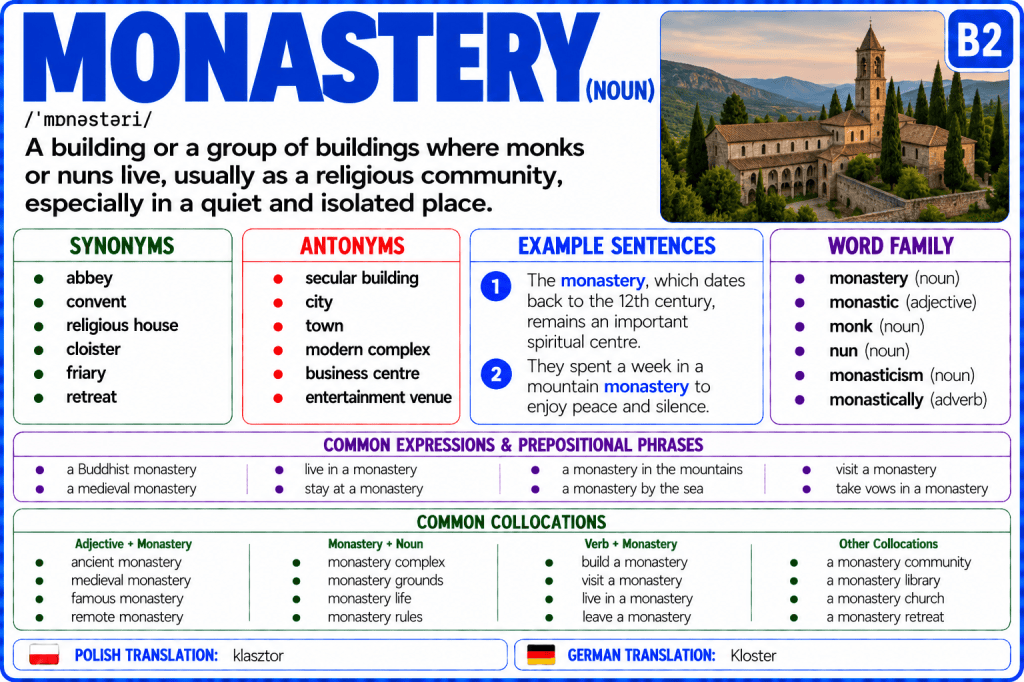
  • Monastery (#5)

    Season 1 – Specimen #5

    🔊 Listen to the pronunciation

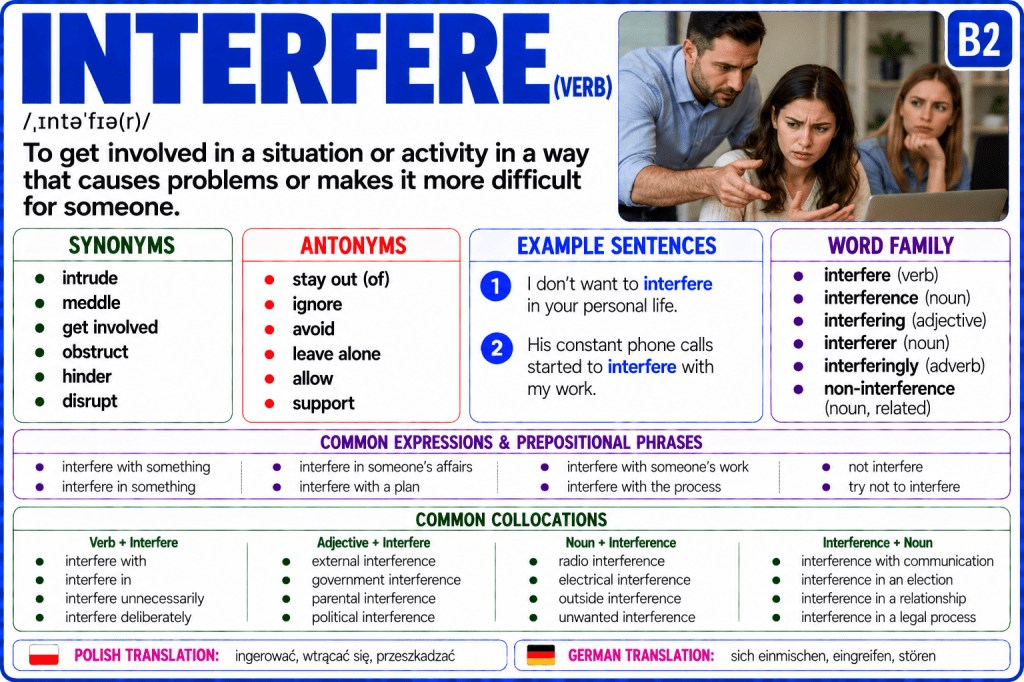
  • Interfere (#4)

    Season 1 – Specimen #4

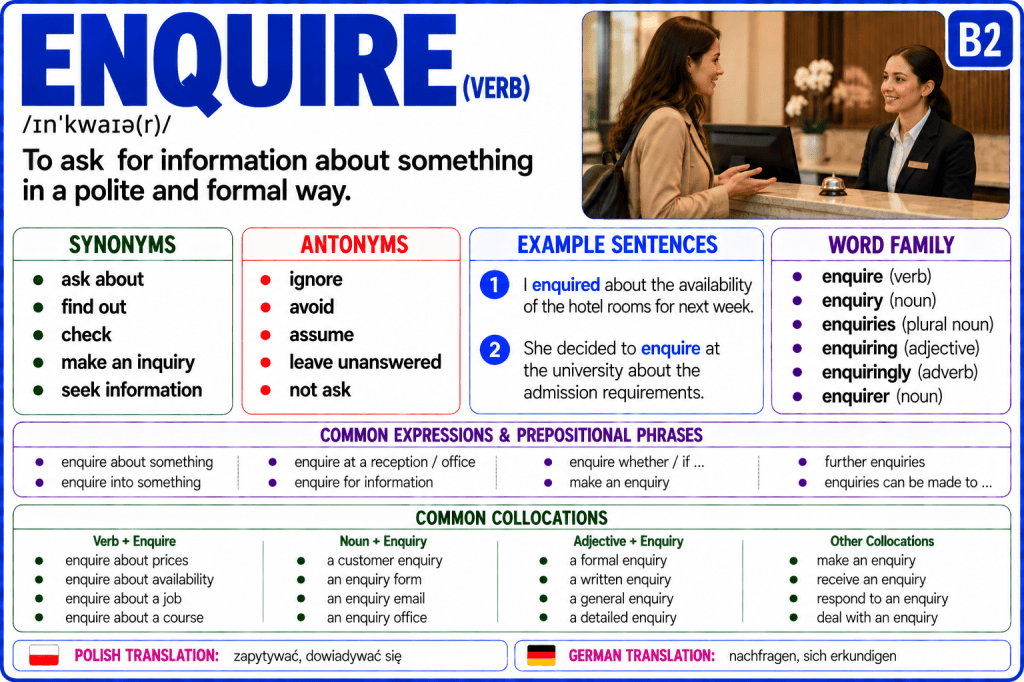
  • Enquire (#3)

    Season 1 – Specimen #3

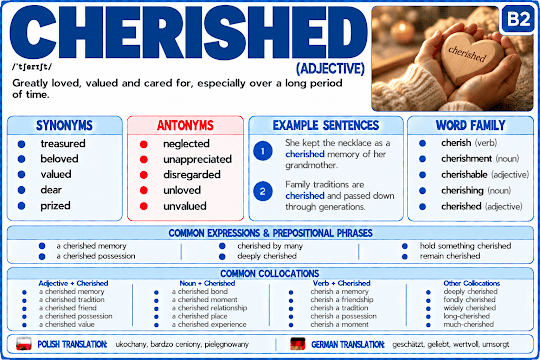
  • Cherished (#2)

    Season 1 – Specimen #2

  • 🎧Why Learn Esperanto?

    B2 · Listening

    🎧 Sound Check

    Get ready to listen.

    Before you listen, think about this:

    Would you learn a language that isn’t the official language of any country? Why—or why not?

    Now make a prediction.

    Why do you think people learn Esperanto? Choose TWO possibilities.

    A. It can help them get better jobs.
    B. They like the idea behind the language.
    C. It is easier to learn than many other languages.
    D. It is useful when visiting a particular country.
    E. Most international companies require it.

    ▶️ First Hearing

    Listen once. Don’t chase every word.

    Don’t worry about names, numbers or details yet. Concentrate on the main message.

    Which statement best summarizes the program?

    A. Esperanto failed because it never became the official language of a country.

    B. Esperanto was created as a simple international language, and people continue to learn it for both its ideals and its accessibility.

    C. Esperanto is becoming more popular than other European languages because of language-learning apps.

    D. Esperanto is mainly useful for people who travel frequently.

    📢 Check your hearing

    ✅ B is the best answer.

    The program explains why Esperanto was created, why people still learn it, and how speakers use the language to connect with people around the world.

    🎚️ Fine-Tuning

    Listen again. This time, tune in to the details.

    1. What do the colors of the Esperanto flag represent?

    A. Nature and freedom
    B. Hope and peace
    C. Europe and unity
    D. Language and culture

    📢 Fine-Tuning Results

    ✅ B — hope and peace
    Green represents hope; white represents peace.

    2. What was Ludwig Zamenhof’s profession?

    A. Language teacher
    B. University professor
    C. Eye doctor
    D. Politician

    📢 Fine-Tuning Results

    ✅ C — eye doctor

    3. What experience influenced Zamenhof’s idea for Esperanto?

    A. He found foreign languages extremely difficult to learn.
    B. He lived among communities that did not speak one another’s languages.
    C. He traveled extensively for his work.
    D. He wanted Polish people to communicate internationally.

    📢 Fine-Tuning Results

    ✅ B — he lived among communities that did not speak one another’s languages.
    Zamenhof believed these language barriers contributed to arguments and conflict.

    4. Approximately how many Esperanto speakers are there today?

    A. 200,000
    B. 500,000
    C. 1 million
    D. 2 million

    📢 Fine-Tuning Results

    ✅ D — about two million

    5. Why is Esperanto described as particularly easy to learn?

    A. It uses vocabulary entirely from English.
    B. It has no grammar.
    C. It has 16 basic rules, no irregular forms and about 1,000 root words.
    D. Speakers don’t need to conjugate verbs.

    📢 Fine-Tuning Results

    ✅ C — 16 basic rules, no irregular forms and about 1,000 root words.

    👂 Trained Ears

    Can you catch what was actually said?

    Esperanto was created by a __________ eye doctor named Ludwig Zamenhof. He believed that better __________ between people from different __________ could help reduce conflict and promote understanding.

    Today, around __________ people speak Esperanto. Learners can attend international conferences and other events where they have opportunities to __________ speaking and listening.

    One reason Esperanto attracts learners is that it is relatively __________ to learn. It has only 16 basic rules and no __________ forms. However, many speakers are also attracted to the ideals behind the language, including hope and __________.

    📢 Reveal the Results

    Esperanto was created by a Polish eye doctor named Ludwig Zamenhof. He believed that better communication between people from different cultures could help reduce conflict and promote understanding.

    Today, around two million people speak Esperanto. Learners can attend international conferences and other events where they have opportunities to practise speaking and listening.

    One reason Esperanto attracts learners is that it is relatively easy to learn. It has only 16 basic rules and no irregular forms. However, many speakers are also attracted to the ideals behind the language, including hope and peace.

    🎙️ Your Turn

    You’ve listened. Now respond.

    Zamenhof believed that a shared language could help people from different cultures understand one another better.

    What do you think?

    Do we still need a shared international language today?

    Does speaking the same language necessarily help people understand one another?

    Would you personally consider learning Esperanto? Why or why not?

  • 🤔 Would You Rather…?

    A2 • Speaking

    Choose one. There is no wrong answer!

    1. Would you rather…
    🐶 be able to talk to animals
    OR
    🌍 be able to speak every language in the world?

    Tell me why.

    I’d rather ______ because ______.

    2. Would you rather…
    ✈️ get free plane tickets for life
    OR
    🏠 get your dream house for free?

    Where would you go—or where would you live?

    I’d rather ______ because ______.

    3. Would you rather…
    ⏸️ be able to stop time for one hour every day
    OR
    🔮 be able to see one day into the future?

    What would you do with your special ability?

    I’d rather ______ because ______.

  • 🎬Caption This!

    C1 • Writing

    What’s going on here?

    Write the best caption you can think of.

    Funny, clever, strange or completely ridiculous—we’ll take them all.

    💬 Leave your caption in the comments.

    Leave a Reply

Is this your new site? Log in to activate admin features and dismiss this message
Log In